
Oncoplastic surgery can achieve good aesthetic results without compromising cancer outcomes
All photos used are with the patient’s signed informed consent
Therapeutic mammoplasty (breast reduction and simultaneous removal of breast cancer)
Therapeutic mammoplasty
Left breast therapeutic mammoplasty and axillary nodal clearance, right breast reduction
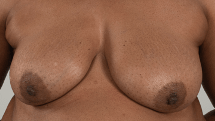
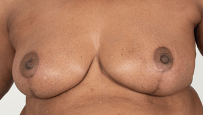
This patient had a large (4 cm) invasive breast cancer in her left breast and also had cancer in her lymph nodes.
She had a left sided therapeutic mammoplasty and axillary lymph node clearance to excise the cancer and a right breast reduction at the same time.
The scar for both sides is an “anchor” type pattern. Note that the left side has some swelling due to seroma fluid from her axillary clearance, which can take a few months to settle down.
Therapeutic mammoplasty
Right breast therapeutic mammoplasty and left breast reduction
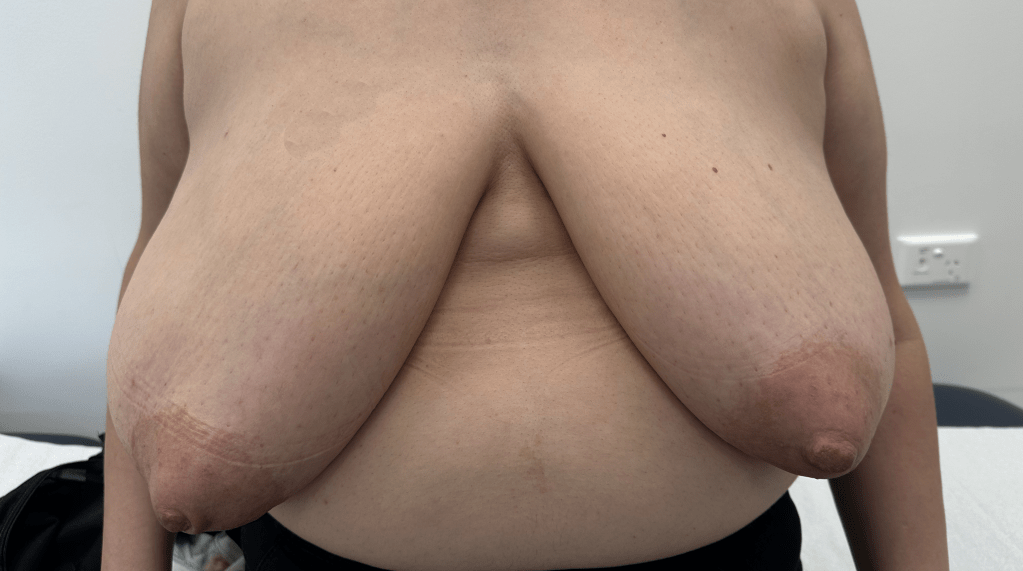
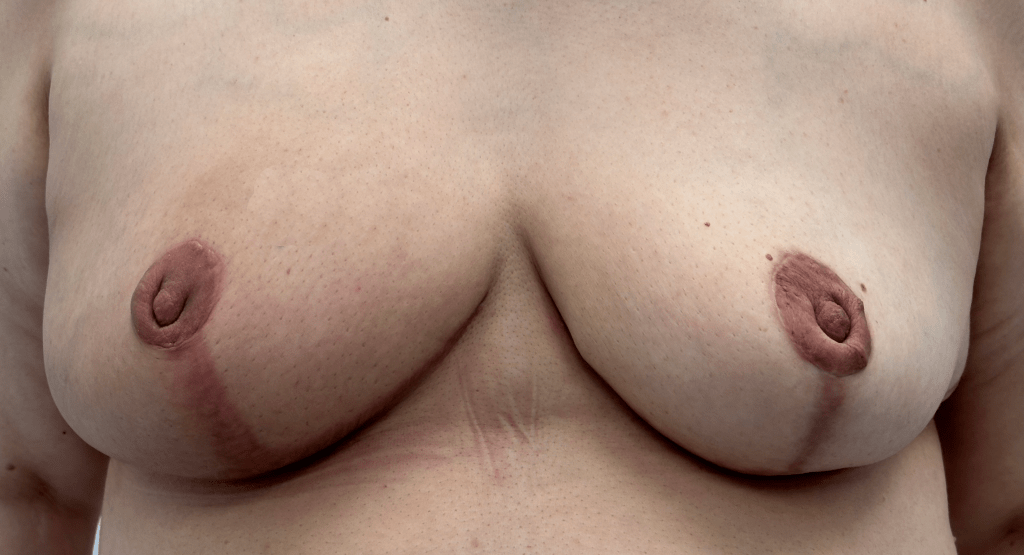
This patient had a relatively small (21mm) area of high grade ductal carcinoma in situ (DCIS) in the right breast and a left breast papilloma.
Although she could have had a simple lumpectomy for both sides, she had struggled with large breasts for her whole life, resulting in neck and back pain. She chose to have a bilateral breast reduction (right therapeutic mammoplasty, left symmetrising reduction mammoplasty), whilst removing the malignant changes at the same time.
Therapeutic mammoplasty
Right breast therapeutic mammoplasty and left breast reduction
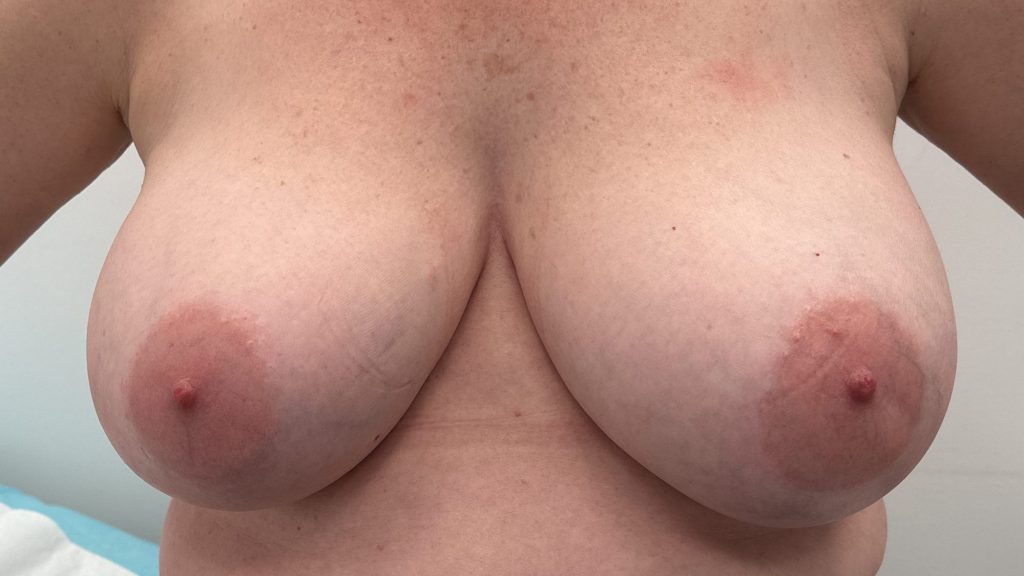
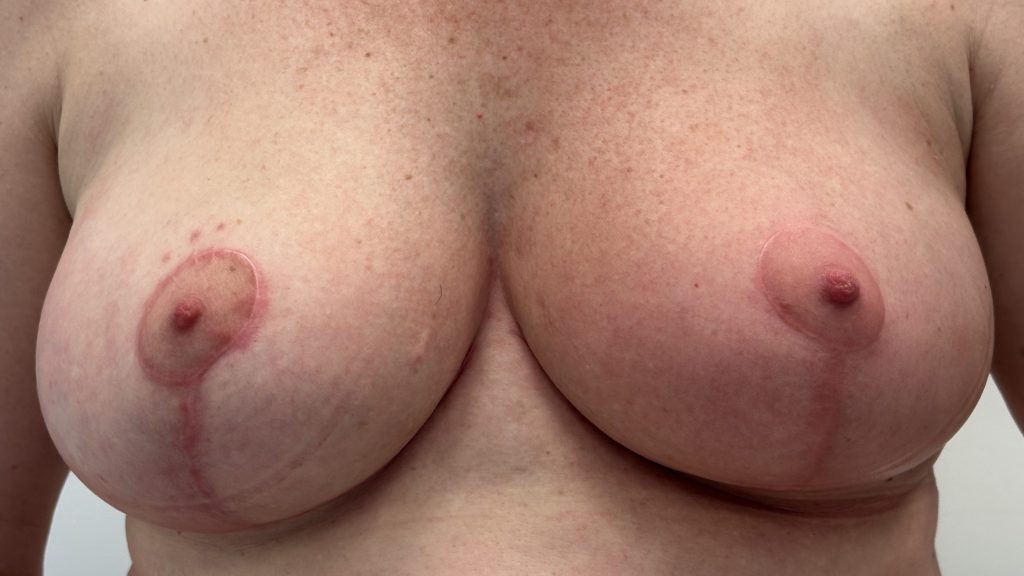
This patient had a large area (>70mm) of high grade ductal carcinoma in situ (DCIS) in the left breast.
She had a left therapeutic mammoplasty with right breast symmetrising reduction at the same time.
The post op image was taken after radiotherapy, which is why the left side skin is slightly red (this will fade with time).
Oncoplastic breast surgery is a subspecialty that combines surgical oncology and plastic surgery techniques and requires individualised approaches for each patient. Mr Li offers the full range of oncoplastic surgery procedures and will be able to provide nuanced discussions as to what is most suitable for each patient.
 Dr Ran Li